

02 Oct Prof Calzada to Discuss “Knowledge in Action” at City Science Summit 2026 in Gipuzkoa
4-5 November 2026 | Invited International Speaker | San Sebastian, Spain
How can disruptive innovation generate meaningful local impact—and how can academic careers support both? Prof Igor Calzada has been invited to explore these questions at City Science Summit 2026, connecting the discussion with his recent co-authored research on MUBIL, smart mobility, AI and computing cooperatives in Gipuzkoa.
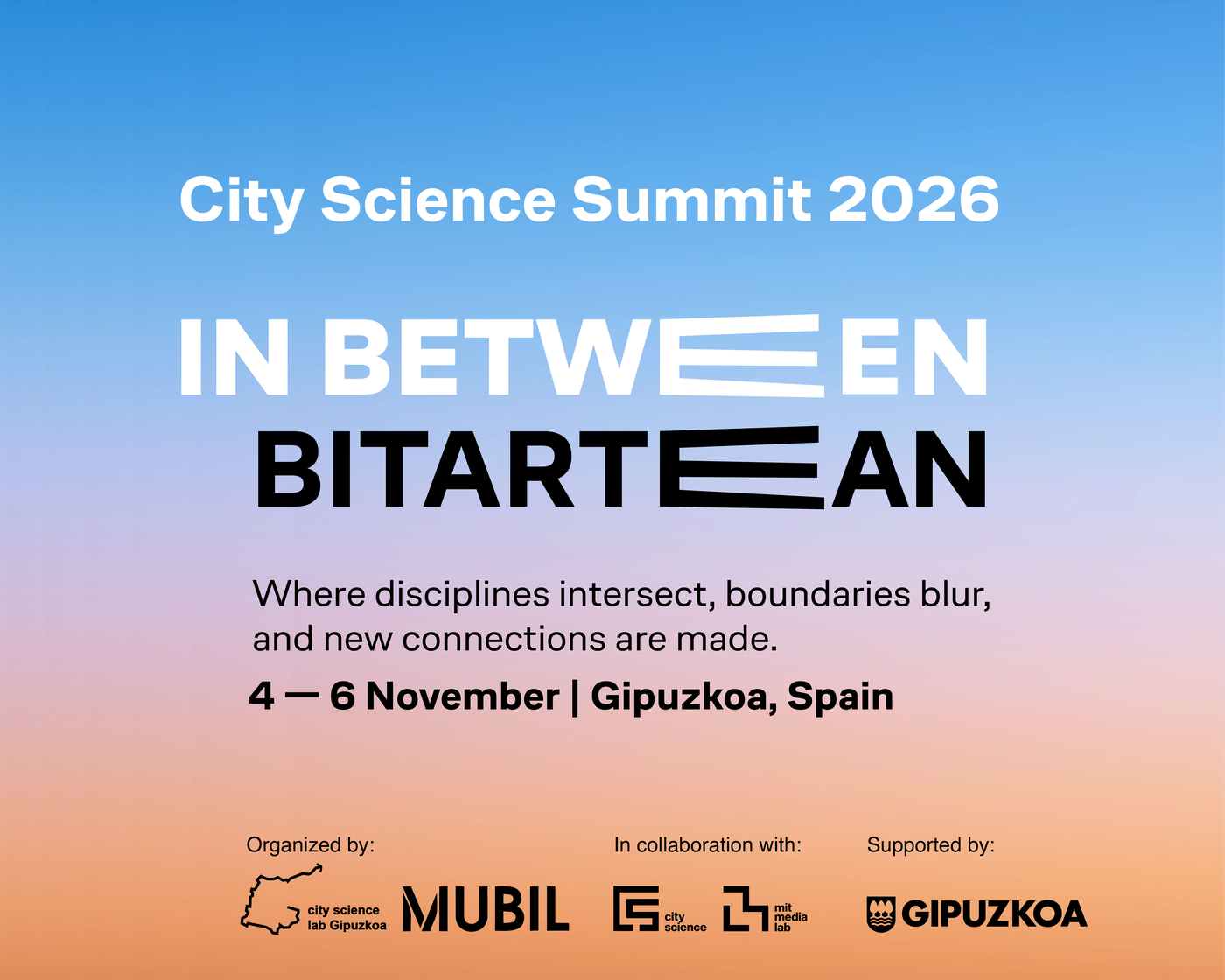
Taking place in Donostia–San Sebastián on 4–6 November 2026, the summit brings together the international City Science Network and researchers and practitioners working across urban science, technology, public policy and the social sciences. This year’s theme, “In Between / Bitartean,” invites dialogue across disciplines, institutions and territories.
Knowledge in Action: Disruptive Innovation, Local Impact and Academic Careers
Prof Calzada’s contribution is entitled “Knowledge in Action: How Can Disruptive Innovation and Local Impact Coexist, and How Can We Build Academic Careers Around It?”
The conversation will explore how knowledge creation connects with societal engagement and territorial development. It will consider how academic careers can combine scholarly rigour with sustained collaboration across universities, public institutions and innovation organisations.
From MUBIL to Computing Cooperatives
A concrete starting point is the article co-authored by Igor Calzada and Zuriñe Varela, published in the International Review of Economic Policy: Smart Mobility, AI, and Computing Cooperatives through the Economic Policy: The Case of MUBIL in Gipuzkoa (Basque Country).
Through the MUBIL case, the article examines the connections between mobility, AI, computational infrastructure and regional economic policy. It argues that innovation depends on institutional capacity and democratic governance alongside technological capability.
The paper also introduces computing cooperatives as a possible approach to collective governance of shared AI and computational resources. This remains an exploratory proposal, opening questions about feasibility, accountability and territorial benefits.
Connecting Research with Public Value
This regional case provides a basis for the summit’s wider discussion: how can research inform innovation while remaining attentive to the institutions, communities and places affected by it?
The connection also raises questions about academic careers. How should universities recognise sustained policy engagement? How can collaboration generate both scholarly contributions and practical learning? These questions extend the article’s governance concerns into the relationship between academic work and local impact.
Join the Conversation in Gipuzkoa
Researchers, students, policymakers and practitioners interested in these intersections are encouraged to explore the programme and attendance options.
City Science Summit 2026 — In Between / Bitartean
4–6 November 2026 | Donostia–San Sebastián, Gipuzkoa, Basque Country, Spain
Explore the programme and attendance information
Related publication
Calzada, I., & Varela, Z. (2026). Smart Mobility, AI, and Computing Cooperatives through the Economic Policy: The Case of MUBIL in Gipuzkoa (Basque Country). International Review of Economic Policy, 8(1), 147–179. https://doi.org/10.7203/IREP.8.1.34084.
Sorry, the comment form is closed at this time.